How to Cut Curtain Bangs Yourself
How to Cut Curtain Bangs: A Step-by-Step Beginner’s Guide
Introduction
Curtain bangs, also known as the curtain fringe, have become one of the most in-demand hairstyles in recent years. Their soft, layered shape frames the face beautifully, making them flattering for almost every face shape and hair type. Unlike blunt bangs, they are forgiving, easy to grow out, and can be styled in multiple ways. If you’ve ever wondered how to cut curtain bangs at home, this guide will give you all the insights you need before picking up the scissors. Also readhttps://thebeautyduty.com/2025/09/01/french-tip-nail-designs-2025/
What Makes Curtain Bangs Special?
Curtain bangs are unique because they:
- Open in the middle like curtains, softly framing the eyes and cheekbones.
- Can be worn long and blended into layers, or short for a bolder look.
- Suit different textures—straight, wavy, or curly.
- They are versatile in styling, from polished blowouts to effortless messy waves.
Learning to shape curtain bangs on your own gives you the freedom to refresh your look gently, adding style and softness without making a drastic haircut decision.
Essential Tools You Will Need
Before starting, make sure you gather the right tools. Using kitchen scissors or random clippers is the quickest way to ruin your look. Professional stylists always stress that tools make or break the result.
Hair Cutting Scissors
Sharp, salon-quality scissors ensure a clean and precise cut. Dull blades can create split ends and uneven lines.
Fine-Tooth Comb
A fine-tooth comb helps you achieve accuracy when sectioning the hair. It also allows you to keep even tension as you cut.
Sectioning Clips
Clips are useful to hold back the rest of your hair while you focus on the bangs. They help maintain neat sections.
Spray Bottle (Optional)
Some stylists prefer cutting slightly damp hair for control, but dry cutting is usually better for beginners. When you cut dry, you see the actual length and natural fall of the hair.

Should You Cut Bangs on Wet or Dry Hair?
When learning how to cut curtain bangs, one of the most common questions is whether to cut wet or dry.
- Dry Cutting: Recommended for most beginners because what you see is what you get. There’s no risk of hair shrinking after it dries.
- When hair is trimmed while damp, it’s easier to control each strand and achieve sharp lines, but the risk is that bangs often shrink as they dry, leaving them shorter than intended.
👉 Pro Tip: If you are a beginner, always cut dry. You can mist the hair very lightly if needed, but avoid soaking it.
Preparing the Hair for Cutting
Before cutting, preparation is everything. Without proper prep, even sharp scissors won’t save you from mistakes.
Step 1: Wash and Dry Your Hair Naturally
Clean hair makes sectioning easier and prevents oil from weighing it down. Blow dry or air dry it in your natural style before you begin.
Step 2: Create a Clean Middle Part
Curtain bangs are always parted down the center. With the help of a fine-tooth comb, carefully carve out a precise middle part, making sure both sides mirror each other.
Step 3: Form the Triangle Section
From the middle part, create a triangular section with the peak at your hairline and the base ending at the outer corners of your eyebrows. This triangle will determine the density of your bangs.
Step 4: Clip Away the Rest of Your Hair
Gather the remaining hair and pin it away with sectioning clips so that only the front portion is left free for cutting. You should now have only the triangular section loose in front, ready for cutting.
Common Mistakes in Preparation
Even before cutting, many people make errors that ruin the outcome. Here’s what to avoid:
- Creating a section that’s too wide—this can make bangs look bulky.
- Parting unevenly—symmetry is key for curtain bangs.
- Skipping the middle part—off-center bangs won’t fall naturally.
- Cutting hair when it’s too wet—risk of going too short.
Step-by-Step Guide: How to Cut Curtain Bangs at Home
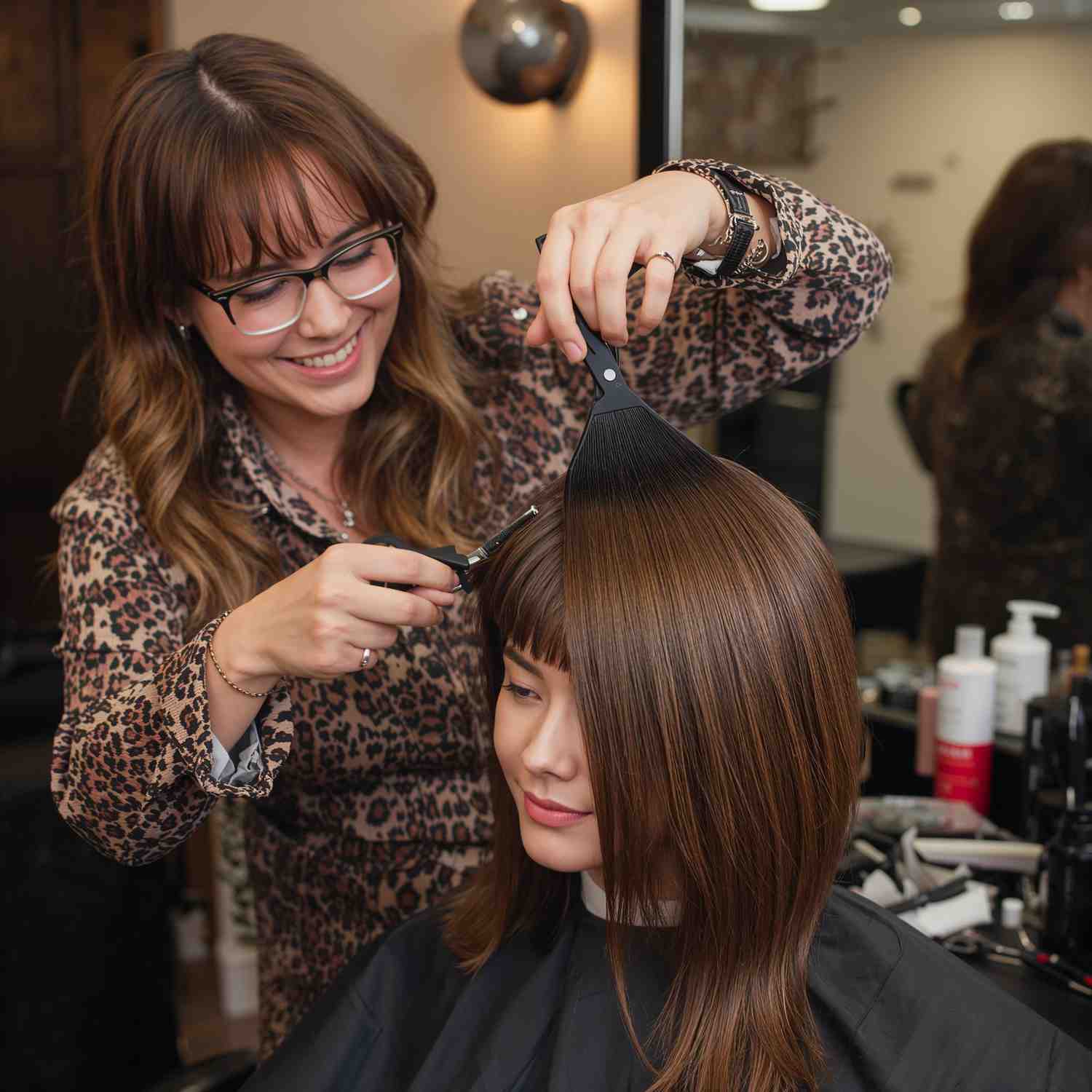
Once your hair is clean, dry, and sectioned properly, it’s time to begin the actual cutting. Many people hesitate at this stage, but if you follow a clear process and work slowly, you can achieve salon-worthy results right at home. The goal is to create soft layers that frame the face instead of blunt or choppy lines. Let’s break it down step by step. Buy nowhttps://amzn.to/3HQiamZ
Step 1: Establish the Guideline
Every great haircut starts with a guide. When learning how to cut curtain bangs, this guide will be the shortest point in the middle of your forehead.
- Take a small portion of hair from the center of your triangular section.
- Decide the length you’re comfortable with—begin longer than you think you want.
- Trim carefully at an angle so the hair falls just above or below your desired spot (often around the bridge of the nose or the lips).
👉 Pro Tip: Always cut longer first. You can always trim more, but you can’t add length back once it’s gone.
Step 2: Angle the Sides
Curtain bangs are known for their smooth transition from short in the center to long on the sides.
- Take a thin section of hair beside your starting guide and bring it forward to continue shaping the fringe.
- Hold it at a slight diagonal angle.
- Cut downward, connecting the new strand to the guide, so the line flows naturally towards the cheekbones.
Repeat this motion gradually until you reach the outer corners of the triangular section.
Step 3: Blend and Connect Both Sides
Symmetry is everything. Once one side is complete, move to the other.
- Use the center guide again to match the length.
- Angle downward the same way, creating a mirror effect.
- When finished, comb both sides forward to check that they meet evenly in the middle.
This step ensures your curtain bangs fall softly and evenly without looking lopsided.
Step 4: Add Soft Texture
Flat, blunt bangs don’t create that airy curtain effect. To avoid this, introduce a little texture.
- Position the scissors upright and make tiny snips into the tips of the hair to add softness and remove harsh edges.
- These small cuts disrupt any blunt edges, creating a wispy finish that blends effortlessly with the rest of the hair.
- Don’t overdo it—just a few snips are enough to soften the finish.
Step 5: Do the Final Check
Once you’ve finished trimming, reassess the overall outline to be sure both sides flow evenly and maintain balance.
- Comb your bangs down and see if the curtain effect appears naturally.
- Style them quickly with a round brush or straightener to reveal how they’ll sit day-to-day.
- If one side looks heavier, lightly trim to balance it out.
Key Mistakes to Avoid While Cutting
Even with the right steps, small errors can make a big difference. Here are the most common mistakes beginners make when figuring out how to cut curtain bangs:
- Cutting too much at once – Always trim gradually.
- Forgetting the middle part – Curtain bangs don’t work without a center guide.
- Using the wrong scissors – Household scissors will create split ends.
- Over-texturizing – Too much thinning will make bangs look stringy instead of full.
Styling Curtain Bangs After a Fresh Cut
Once you’ve trimmed your bangs into shape, the real magic comes from how you style them each day. Simply knowing how to cut curtain bangs is not enough—styling is what gives them their signature movement and face-framing charm. Depending on your mood, you can wear them polished, bouncy, or effortless and casual. Buy nowhttps://amzn.to/3HQiamZ
Blow-Drying With a Round Brush
- Start with clean, towel-dried hair.
- Place a round brush underneath your fringe.
- Pull the brush upward and roll it back while directing warm air from the dryer.
- Allow the hair to cool in position before letting it fall—it will naturally flip away from your face with soft volume.
Quick Styling With a Flat Iron
- Clamp the iron gently at the roots.
- Twist your wrist outward as you move downward, creating a natural sweep.
- This method is fast, ideal for mornings when you need a five-minute fix.
Creating Texture With a Curl Wand
- Wrap small sections loosely around the barrel.
- Hold for just a moment; you want a bend, not a tight curl.
- Release and comb through with fingers for a lived-in, airy finish.
Keeping Curtain Bangs Looking Fresh
Bangs demand attention, but maintenance doesn’t have to be complicated. To keep them falling perfectly, follow these habits:
- Regular Mini-Trims: Every few weeks, snip a little to keep them from covering your eyes.
- Lightweight Styling Products: A tiny bit of serum or spray helps tame flyaways without making the hair heavy.
- Dry Shampoo Rescue: Since bangs sit on the forehead, they can pick up oil quickly—dry shampoo keeps them fresh between washes.
- Smart Accessorizing: Headbands or clips come in handy when you’re working out, or when your bangs are growing out.
Mistakes You Should Avoid
Even if you’ve mastered how to cut curtain bangs, a few missteps can spoil the result:
- Trimming off too much length at once.
- Ignoring the middle parting, which keeps the curtain shape intact.
- Overheating with tools without using a heat protector.
- Cutting without checking symmetry—one side often ends up shorter.
Stay patient, work slowly, and always check your progress in the mirror. Also readhttps://thebeautyduty.com/2025/08/27/ice-spice-no-makeup/
Final Thoughts
Curtain bangs are stylish, versatile, and surprisingly low-maintenance when done right. By learning how to cut curtain bangs carefully and pairing that with proper styling and upkeep, you can enjoy a face-framing look that grows out gracefully and never feels overwhelming. The secret lies in taking your time—start with longer pieces, trim gradually, and add softness with texture. Whether you’re dressing up for an event or keeping it casual, curtain bangs adapt beautifully, enhancing your natural features with ease.
Frequently Asked Questions
1. Can I cut curtain bangs myself if I’ve never cut hair before?
Yes—just go slowly. Begin with longer lengths and make small trims instead of chopping a lot at once.
2. How often do they need trimming?
Most people find that a small touch-up every three to four weeks keeps the shape looking neat.
3. Do curtain bangs really suit all face shapes?
They can be adjusted for almost everyone. Shorter versions flatter oval faces, while longer, jaw-grazing versions balance round or square faces.
4. Should I cut them on wet or dry hair?
For beginners, dry cutting is safer—you see the true length immediately and avoid the shock of bangs bouncing up once they dry.
5. What if I mess up and make them too short?
Don’t stress—hair grows back quickly. In the meantime, style them to the side or pin them back until they reach the right length.